Walk into any active investigation and you’ll notice something pretty quickly, how evidence gets captured at the start often decides how the whole case plays out later in court. That’s really what Crime Scene Forensics is about, blending the right hardware, software, and training so officers document things properly the first time round. There usually isn’t a second chance to get it right.
Daetech Systems has built a solid reputation supplying forensic equipment to police forces across the UK and further afield. Their MIDAS DCL Solo units are a good example, portable kit built specifically for working right at the scene, no fixed power supply or cabled connection required.
Portable Kit Built For Actual Fieldwork
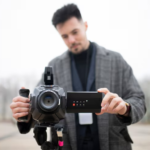
Crime scene forensics often happens under pressure, sometimes in places without easy power or a stable signal anywhere nearby. That’s why portable units like the MIDAS DCL Solo run on WiFi, 4G, and battery power, giving officers room to work off grid whenever they need to. When every minute matters, that kind of flexibility isn’t a nice extra, it’s the whole point.
Saudi Arabia’s State Security department, under the Ministry of the Interior, picked up this exact system for its forensic work. Vietnam, meanwhile, has kept expanding its own MIDAS rollout, gradually strengthening its ability to investigate crimes caught on CCTV across different regions.
What Actually Happens At The Scene
- Capturing clear video and photographic evidence on the spot
- Measuring out the scene using photogrammetry software
- Calibrating cameras so images can be read accurately later
- Getting evidence transferred securely for analysis afterward
- Documenting everything before conditions can shift or evidence degrades
Conditions at a scene rarely stay the same for long, so equipment that works properly the first time isn’t really optional. Miss a detail during initial capture and there’s a good chance you won’t get another shot at recording it later.
Getting Evidence From The Scene Into The Lab

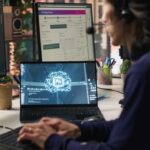
Once evidence leaves the scene, it usually ends up on a workstation running Cognitech Tri Suite, which brings together Video Active, Video Investigator, and Automeasure. Video Active handles capture and camera calibration, Video Investigator processes and sharpens the footage, and Automeasure takes care of precise scene measurement so investigators can piece together spatial details with real accuracy.
That whole pipeline, from field capture right through to lab processing, is basically how Digital Forensics Tools work day to day. Interestingly, Cognitech’s underlying technology reaches well beyond policing too. Its algorithms even helped reconstruct the very first image of a black hole in the M87 galaxy back in 2019, which says a lot about how advanced this image processing actually is under the hood.
Training That Actually Sticks
- New officers get proper hands on time with portable retrieval systems
- Teams work through the evidence management software under guidance
- Departments get briefed whenever new features roll out
- Remote sessions keep training going even during travel restrictions
- Ongoing support keeps everything properly maintained long after
Indonesia is a good example of training done right. After receiving several bespoke portable systems, some with facial recognition built in, the government arranged a week of onsite training in Jakarta. Officers learned to run the MIDAS system alongside Cognitech Tri Suite, so the equipment was actually put to proper use from day one, not left half understood in a storeroom.
Why It Helps When Forces Stay Consistent
UK police forces including Dorset, Devon and Cornwall, and Dyfed Powys have all had regular software updates to keep their systems in line with current standards. These usually bring better CCTV player support along with general bug fixes, so different departments end up handling similar evidence in a similar way.
That consistency matters more than people realise. Evidence sometimes has to move between forces, or even between countries, during bigger investigations. When systems share the same technical foundation underneath, that transfer and review process goes a lot more smoothly for everyone involved.
A Commitment That Lasts Years, Not Months
Few examples show the lasting value of crime scene forensics better than the ongoing support given to Operation Resolve, the investigation into the Hillsborough disaster. Equipment supplied back in 2013 is still supporting the AV team years on, as the case moved from inquest through to criminal trials. That kind of sustained involvement really highlights how forensic technology isn’t a one time purchase, it’s more of an ongoing partnership.
During tougher periods, like the early days of the pandemic, Daetech also stepped in with emergency updates, letting officers convert CCTV clips into court ready formats while cutting down unnecessary physical contact with evidence discs. Small changes like that show how forensic support bends to fit real circumstances, not just technical checklists.
Final Thoughts
Modern investigations rely on a lot more than gut instinct, they depend on evidence that’s captured properly and processed carefully enough to hold up under scrutiny. From portable units used right at the scene to lab grade software running behind the scenes, every stage plays its part in building cases that actually stand up. As technology keeps moving forward, the tools supporting officers both in the field and back in the lab will keep changing too, helping make sure justice stays grounded in solid, properly documented evidence.